-
 The Python Challenge helps raise awareness about the harm invasive species cause in South Florida.
 -
 Nearly 300 Burmese pythons were removed from the Florida Everglades during the annual Florida Python Challenge.
 -
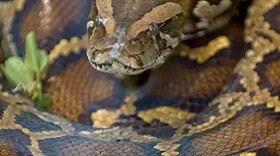 The primary goal of the hunt is never the body count. It was awareness — of the pythons and not to let other species free in the public — and on that measure it worked. While the public became aware of the python problem nothing anyone tried slowed down their movement through the Everglades.
 -
Invasive species have been wreaking havoc on Florida, and one Miami-based company may have found the perfect solution to dealing with unwanted critters. Turn them into fashionable accessories.
-
 The remote-controlled “Robobunny” is designed to lure the stealthy Burmese python out of hiding so trappers can pounce. Burmese pythons have been slithering, eating, and reproducing throughout the Everglades since at least 1979.
 -
 Florida is home to more than 500 nonnative species, more than 50 of which are reptiles. Current monitoring techniques depend on visual surveys by scientists, and this is far from an exact science because reptiles — particularly snakes — are extremely elusive. A new technique being developed by scientists at University of Florida's Institute of Food and Agricultural Sciences (UF/IFAS) can identify DNA traces of Burmese pythons — as well as northern African pythons, boa constrictors, and rainbow boas — weeks after they have left an area using soil or water samples.
 -
 Registration for the 2025 Florida Python Challenge is open. The event, hosted by the Florida Fish and Wildlife Conservation Commission and the South Florida Water Management District, encourages the removal of invasive Burmese pythons from the Everglades and its surrounding land.
 -
Florida is home to more than 500 nonnative species, more than 50 of which are reptiles. Current monitoring techniques depend on visual surveys by scientists, and this is far from an exact science because reptiles — particularly snakes — are extremely elusive. A new technique being developed by scientists at University of Florida's Institute of Food and Agricultural Sciences (UF/IFAS) can identify DNA traces of Burmese pythons — as well as northern African pythons, boa constrictors, and rainbow boas — weeks after they have left an area using soil or water samples.
-
Florida is home to more than 500 nonnative species, more than 50 of which are reptiles. Current monitoring techniques depend on visual surveys by scientists, and this is far from an exact science because reptiles — particularly snakes — are extremely elusive. A new technique being developed by scientists at University of Florida's Institute of Food and Agricultural Sciences (UF/IFAS) can identify DNA traces of Burmese pythons — as well as northern African pythons, boa constrictors, and rainbow boas — weeks after they have left an area using soil or water samples.
-
 Naples resident Jake Waleri, who is 22 and an amateur python hunter, caught a world-record 19-footer with some friends earlier this month in the Big Cypress National Preserve.

© 2026 WGCU News
PBS and NPR for Southwest Florida
Play Live Radio
Next Up:
0:00
0:00
Available On Air Stations


