This year marks StoryCorps 11th annual “Great Thanksgiving Listen,” which encourages people of all ages to record an interview with an elder, mentor, friend or loved one to preserve their story for future generations.
Through the StoryCorps app, anyone can record and upload a conversation to be preserved through the American Folklife Center at the Library of Congress, where it will become a part of what is now the largest single collection of human voices ever gathered.
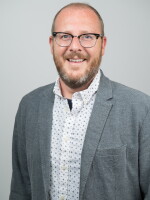
WGCU’s John Davis recently spoke with StoryCorps founder Dave Isay about this initiative, and about the power of listening.
Transcript:
DAVE ISAY: So, we have created this tradition of having teachers assign students to record a loved one over the Thanksgiving break and make it part of American history as kind of the easiest and must fun assignment that they’ll give all year. So, that’s essentially what it is. Everybody can do it. It doesn’t just have to be teachers assigning high school students. It can be all of us, but the idea is to use this device that we often go down the rabbit hole with to connect with other people in a meaningful way.
JOHN DAVIS: And when people go into a StoryCorps booth, there’s a trained facilitator there with them.
ISAY: Yes.
DAVIS: Now with these conversations people are doing through the app, they’re functioning as their own facilitator. So, I’m curious about how you would describe what makes a good facilitator through the lens of somebody who’s going to be doing this on their own.
ISAY: It’s not that different than the experience you have in the StoryCorps booth. You want to find a quiet place. You want to shut the door, turn off all the electronics in the room that could create a noise and just focus on the person that you’re interviewing, and ask questions and listen. And the facilitators always say, “ask that question you’ve always wanted to ask,” because the 40 minutes goes by so fast. And just listen and, you know, most people have a really meaningful, beautiful experience and doing a StoryCorps interview reminds people that they matter and won’t be forgotten. One of our mottos is “listening is an act of love.” And these mementos of grandparents, parents, mentors, become incredibly important, especially after the people pass on, which will hopefully be a very, very long time from now, but as you know from radio, the soul is kind of contained in the voice. So, these are really important, kind of time capsules of who we are.
DAVIS: I wanted to make a local connection. Here in Southwest Florida, I’m speaking to you from the campus of Florida Gulf Coast University and we have something here called the ROCK Center. That stands for roots of compassion and kindness. And the center has a program called ROCK of Ages that pairs college students with older adults to share their personal stories, to build relationships, to foster empathy across generations. And I see so much of a philosophical connection between that initiative and StoryCorps and what you’ve been doing for more than two decades. Do you see storytelling and perhaps, even more importantly, listening to someone else’s life experience as a way of teaching empathy and compassion?
ISAY: First of all, that’s great that there’s a ROCK Center, and we’d love to have, when the young people go out and do interviews, just use the StoryCorps app. It goes to the Library of Congress. Why not? We’d love to have a whole library of those kinds of interviews. You know, John? You’re absolutely right. StoryCorps is much more about listening than storytelling. And that act of listening can be very meaningful for people. You know, we live in a country where a lot of people feel like they don’t matter. A lot of people feel unheard or silenced. And what StoryCorps tries to do is democratize this experience of being interviewed. You know, I did radio documentaries for decades before starting StoryCorps. The microphone gives you the license to say things, to ask things, to talk to people you would may never talk to before. And part of the impetuous for StoryCorps was giving everyone else the chance I had for all those decades of getting to listen to people’s stories. It is about empathy. Our mission is to create more empathy in the world. So, you hit it right on the head when you said that.
DAVIS: When the StoryCorps Mobile Tour airstream (trailer) came to Fort Myers last in 2024, I took on the task of whittling those 40-minute conversations down to, you know, three to five minutes of cohesive, compelling narrative. And I had enough that I could air one every Monday for the entire year.
ISAY: That’s crazy.
DAVIS: I wanted to share with you this note I got. There were two sisters: Jan Doetsch and her sister Karla Doetsch Wheeler. It was many, many months after they had recorded that their StoryCorps story actually aired on WGCU. And it happened to be just days after Jan had passed away. And I got this note from her sister that says, quote, “We’re a family that believes in signs of continued love from those who transition, and I asked Jan to promise to send us whatever signs she could from her spiritual perch. She promised she would. I told her we’d do our best to stay open to any and all of her signs. I firmly believe that Jan pulled some strings in Heaven to make sure you chose OUR story to be the first Story Corps broadcast after her passing. And today when I learned about the broadcast, I was overcome with happy tears, certain that our precious Jan used you to send me – and all the many friends and family who loved her – one of the most tangible, glorious signs ever!” Is StoryCorps magic?
ISAY: Wow. Wow. I do think there’s something magical that happens in the booth. I mean, we’ve had hundreds of thousands of people participate. Almost to every single interview we haven’t seen anything go wrong in the booth. You know, when we started StoryCorps I was worried that you’d have moments where people would fight and scream at each other.
DAVIS: Sure.
ISAY: You know, Jerry Springer kind of moments. And none of that has ever happened. So, I think StoryCorps is kind of magical. And I think StoryCorps just kind of reminds us of the basic goodness of people.
DAVIS: Well, Dave Isay, founder of StoryCorps, it has been an absolute pleasure. Thank you for taking the time.
ISAY: John, thank you so much.