
Three hurricanes in two years took a toll on Florida Gulf Coast University's Vester Field Station.
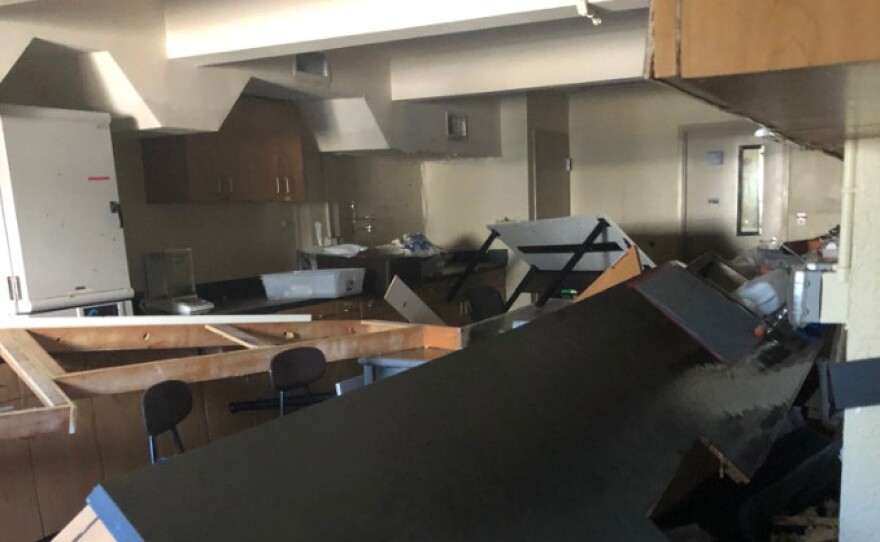
Hurricane Ian ravaged the Bonita Beach Road facility, tossing samples, equipment, desks, boats and whatever wasn't actually nailed down, into a maelstrom of debris.
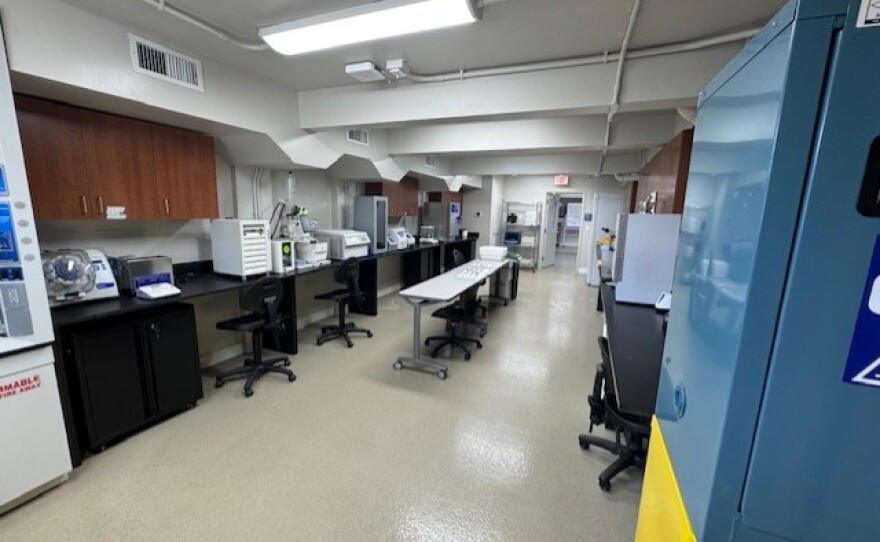
The site repaired the damage, but 2024 arrived and the surge from hurricanes Milton and Helene, while not Ian-like, still caused significant damage just two months after Vester had reopened.
But, that's all behind the research and classroom facility now. Vester was officially reopened Monday, February 16, and is ready to resume operations.
In a "ribbon-cutting" ceremony of sorts, FGCU President Aysegul Timur welcomed supporters and staff alike to the again-revamped facility stressing that the site was part of "YOUR university."
Also highlighted were those who have donated time and financial resources to help Vester return to operations.
Because Vester is connected to FGCU's The Water School, it fell to the school's dean, Dr. Greg Tolley, to proffer thanks.
"I want to begin by thanking Eileen Connolly-Keesler, and the amazing work of the Collier Community Foundation and their multiple donors for their tireless efforts to provide access and opportunity for everyone who lives in this region," Tolley said.
Tolley thanked Keesler, the organization's president and CEO, and described that organization's assistance which included a $150,000 grant to Vester, as well as other aspects of the foundation.
"Their work touches nearly every corner of community life, addressing affordable housing and hunger mental health and substance abuse, education, employment, crisis and disaster relief and vital support for seniors and veterans and ever since, the foundation is a beacon of hope in southwest Florida, when three hurricanes struck this region in just over two years period of time, the impacts of the Vester Field Station were Just not the buildings that you see around ... they impacted research, they impacted education, they impacted our ability to work with our communities," he said. "But when we needed help, the Collier Community Foundation came to our aid and supported our efforts to rebuild. Because of them, we can stand here today and proudly say, Vester is back."
Tolley touched upon what the renewed station means to everyone.
"Today's celebration is about much more than just reopening the field station. It's about reaffirming a shared commitment to this community, to knowledge, to stewardship, to collaboration and to community. It's about recognizing what can happen when philanthropy, education and public purpose come together with a common goal," he said. "Standing here now, seeing this facility restored and once again, ready to serve students in that region, truly puts a smile on my face, because I know the tremendous good that will come from the work conducted here."
Sitting by a small spit of land on Little Hickory Island near Barefoot Beach and along Bonita Beach Road, the station has served as a resource for university students and faculty as well as researchers and scientists from around the world since 2007.
The passage of Hurricane Ian, however, stopped all activity at the former commercial fish house and old Florida-style resort. After repairs and reopening in 2024, hurricanes Helene and Milton renewed damage.


The station's director, Dr. Michael Parsons, couldn't have been more pleased with the facility's reopening.
"The perception is that we are finally back where we were, and now can move forward, looking to the future. So it's a positive outlook, positive perception," Parsons said. "We can now set goals instead of just trying to recover and and go back to what we were. So it's definitely looking forward to the future rather than just rebuilding."
There is also a downside to the rebuilding and resumption of research work and teaching at Vester. Parsons acknowledged that the 11-foot-deep waters of Ian virtually washed away samples and research that was being done at Vester.
"Unfortunately, a lot of the samples we lost are gone, and so we'll just have a blank space in that record, but we can work around that. We do have some samples that were up on campus, and we have other data streams that came in, but that's just just like people who lost other things and personal belongings, that's some of the things that we lost that's just gone."

But Parsons also acknowledged that life goes on and the station back up and running is the best way to get on with it.
"We have classes that are ongoing. We have field trips that we're doing with high school students as well, and we're really ramping up the research that we're doing," he said. "So we go out on the water with a lot of our boats, but now, having that capacity back here at the field station, we can bring samples back, bring fish back, bring sea grasses back, and things like that."
So, what happens when another Ian, or worse, comes along? What will the Vester Field Station do differently the "next time?"
Parsons had a ready answer, and it invokes the old Boy Scout Motto: "Be Prepared."
"The plan is to remove everything that we can and go to high ground," he said. "But seriously, when we've been rebuilding, we've built in resiliency in those systems. So anything that's really a value we can remove and get out of harm's way. And also, with some of the rebuilding that's been done, we can recover, clean up better, dry out faster, so we should be able to rebound a lot faster."
WGCU is your trusted source for news and information in Southwest Florida. We are a nonprofit public service, and your support is more critical than ever. Keep public media strong and donate now. Thank you.