The Bailey-Matthews National Shell Museum and Aquarium on Sanibel has been a fixture on the island since it opened in 1995. Its story began in the 1980s when a local shell collector named Charlene McMurphy provided some seed funding, and then a nonprofit was formed to begin raising funds and attention. One of the museum’s early boosters was Raymond Burr of Perry Mason fame.
In 1989, three local brothers, Francis, Samuel, and John Bailey, deeded eight acres on Sanibel Captiva Road to the Museum to memorialize their parents, Frank P. Bailey and Annie Mead Matthews and the Bailey-Matthews Shell Museum officially opened to the public in 1995.
A year later, Dr. Jose Leal came onboard as Executive Director — he held that role for 17 years before becoming Science Director and Curator. And now, later this year, he plans to retire, so we invited him in to chat about his career and the work he does.
Guest:
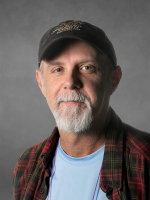
Dr. Jose H. Leal, Science Director and Curator at the Bailey-Matthews National Shell Museum & Aquarium.
WGCU is your trusted source for news and information in Southwest Florida. We are a nonprofit public service, and your support is more critical than ever. Keep public media strong and donate now. Thank you.
Transcript
Mike Kiniry
This is Gulf Coast Life. I'm Mike Kiniry. Thanks for joining us. The Bailey Matthews National Shell Museum and Aquarium on Sanibel Island has been a fixture on the island since it opened in 1995. Its story began in the 80s when a local shell collector named Charlene McMurphy provided some seed funding and then a nonprofit was formed to begin raising funds and attention. One of the museum's early boosters was Raymond Burr of Perry Mason In 1989, three local brothers, Francis Samuel and John Bailey, deeded 8 acres on Sanibel Captiva Road to the museum to memorialize their parents, Frank P. Bailey and Anne Mead Matthews, and the Bailey Matthews Shell Museum officially opened to the public in 1995. A year later, our guest today, Dr. Jose Lial, came on board as executive director. He held that role for 17 years before becoming science director and curator. And now later this year, he plans to retire. So we invited him in to chat. Dr. Lial, welcome to the show.
Dr. Jose Leal
Thank you. It's great to be here.
Mike Kiniry
What first drew your attention to shells? Did it start young?
Dr. Jose Leal
Yeah, I was actually born in Rio, you know, in Brazil. And we live really, really close to the beach. So the beach was like a backyard to us. And at that point in time, there were plenty of shells there on the beach. If you go there today, not as much.
Mike Kiniry
Is that because they've been picked up or the ecology has changed?
Dr. Jose Leal
Yeah, the systems have changed, I mean, with human encroachment and development and some mild pollution. So anyway, to make a long story short, it goes back to my early childhood years, my fixation with shells and then growing into, my profession as a marine biologist.
Mike Kiniry
How old were you when you first learned there was a field called malacology and perhaps even a career for you in it?
Dr. Jose Leal
I guess when I first learned about that, maybe my middle teens, 15, 16 years of age.
Mike Kiniry
So you went to school for marine biology and headed toward that field.
Dr. Jose Leal
The curious thing about it is that my dad was a very well-succeeded engineer back in Rio. And I was, I thought at that very early stage of my life, I believed that was the thing to do. Maybe his influence, he never really pushed for it, but I naturally went to engineering school. Yes, and I was there for 2 1/2 years And by the end of my stay in engineering school, I wasn't actually going to class any longer. I would go to the library and read books on marine biology and ichthyology and malaccology. And at that point, I'd say, wait a minute now. I'm still young, so let's reverse course here. and do something right.
Mike Kiniry
Seems like it turned out okay.
Dr. Jose Leal
I'm sure it did.
Mike Kiniry
I was telling people I was going to talk to a malacologist, and they're all like, what does that mean? And so that means you study mollusks, basically, simply put. Why is it not called molluscology?
Dr. Jose Leal
Oh, well, I really don't know the answer to your question. You know, the root of that word, malacus, it means mollusks in Greek.
Mike Kiniry
There you go. I knew there was a reason for it.
Dr. Jose Leal
Yes, and I think it was just a natural formation of the word with the ending -ology, which is the study of mollusks.
Mike Kiniry
So I had heard of malacology, but I'd never heard of conchology, which I've learned by reading up on you. Am I pronouncing it right for starters? Is it conk or conch?
Dr. Jose Leal
It's "conk."
Mike Kiniry
And so conchology is a subcategory of malacology.
Dr. Jose Leal
Well, conchology has been applied to, you know, the more like to the hobby of collecting shells and people who devote themselves, you know, to that as a hobby. And sometimes the words are kind of overlapping. It's some people actually in the past have used it in a derogatory sense, but I think it's really cool that we have so many people that do not have that as a profession, but chose to embrace that as a hobby. And a lot of good work has been done by the so-called amateur oncologists or citizen scientists in the field of malacology.
Mike Kiniry
Interesting. Well, I'm glad I asked because that's something that I learned. So Mollusca is the phylum, right? To remind people of their high school biology and taxonomy. So Mollusca is the phylum and then there's classes underneath it which include the different kinds of mollusks and things like that. Is that about right?
Dr. Jose Leal
That's right. So we have, within the phylum mollusca, we do have classes such as the gastropods and all the coiled shells. We have the bivalvia, which are the clams, oysters, muscles, et cetera, and the cephalopods, which include.
Mike Kiniry
Meaning like octopuses are in the same or the same phylum as a bivalve.
Dr. Jose Leal
Yes, as strange as it may look, I mean, it's a they all come from the common ancestor back about 500 plus million years back into the past.
Mike Kiniry
So on reading up on this, it seems like the number of species that fall into that phylum is not a definite number and it said, depending upon who you ask. So you're an expert, you're an internationally recognized malacologist. About how many species fall into that.
Dr. Jose Leal
Well, that's a very cool question too. What happened is that because there are so many species named throughout the many past centuries, that is very hard to count how many are there named. I think that nowadays it became a pretty sophisticated field to find how many species are in the different groups. And our best estimate is that probably about 100,000 now based on the some fancy mathematics and all that. I mean, you may find that strange, but that's, we have to extrapolate, and I think a good estimate would be 100,000.
Mike Kiniry
Has DNA changed the field from doing measurements on how the shells are arranged or whatever to being able to tell with a different kind of science?
Dr. Jose Leal
Absolutely. I mean, DNA, the study of genetics in particular, DNA and RNA sequencing has changed the field tremendously. You know, I find that some species that are very different looking actually can be quite closely related from a genetic standpoint by using DNA sequencing.
Mike Kiniry
I asked Gemini, I hope you don't mind, if you had characterized or identified any species, and it gave me 3 examples. I want you to tell me if I'm right. The genus dilemma.
Dr. Jose Leal
Yes.
Mike Kiniry
Deep sea hadal limpets.
Dr. Jose Leal
Yes.
Mike Kiniry
New deep water volutes.
Dr. Jose Leal
Yes.
Mike Kiniry
What can you tell me about those? are there more or was that the is that the total?
Dr. Jose Leal
There are more than that, but it's cool that, for a while in my career, I did name quite a few new species, which is also a thrill. With the dilemma, it was very strange by that a shell collector that he's passed away now, He actually operated a lobster fishing boat out of Kajoke, near Key West. And he was always bringing mollusks. And quite a few of those were new species. And I ended up at one of the conventions of shell collectors. And someone saw me walking in, and he run to me showing that specimen of that new species, a very bizarre, bizarre little clam. And I was trying to dig a name for the genus because it was not only a new species, but it was so different from what we knew that we decided to, I mean, I'm saying we, me here. The royal we. The royal we, decided to create a new genus name for that. And I looked and I said, this is, it's such a puzzling species and I think the name Dilemma will be cool. But that name may be preoccupied. I mean, preoccupied means someone already used it. So there is a big list and there is put together in England. It's been put together for the past 150 plus years where you can go and it's online now. and you can go and check whether or not a name has been used, and lo and behold, the name Dilemma was available. And I said, well, that's a cool name.
Mike Kiniry
And I'm sure it's a long... arc between finding it and going, this is cool, and it becoming officially named, right? Yes. There's probably, there's science, there's publishing even maybe. Like how does, like what's the short version of how that works?
Dr. Jose Leal
Well, back then I didn't have access to genetics work through DNA sequencing. So I did a lot of work with the anatomy of the animal. dissecting the animal and looking at body parts and taking pictures with the animal under a microscope. So the basis for the study is the sheer just pure anatomy of the bipols.
Mike Kiniry
Wow. I'm talking today with Dr. Jose Lial. He's science director and curator at the Bailey Matthews National Shell Museum and Aquarium on Sanibel. He'll be retiring later this year after 30 years at the museum. Dr. Lial is an international leader in the field of malacology. That's the study of the branch of invertebrate zoology dedicated to the scientific study of mollusks. So now that we've nerded out on mollusks a little bit, let's talk about the museum. You joined the museum in 1996, the year after it opened. How did that come across your radar? How did that job?
Dr. Jose Leal
Well, a person that was very influential in establishing the museum was Robert Tucker Abbott, who is probably the best known author in malacology books, both for professionals and citizen scientists and all. He's very well known. And Tucker, as we called him, he was the founding director of the museum. And what happened was around the time that the museum, the final year of the museum, before the museum opened, he was diagnosed with a very serious disease called pulmonary fibrosis. So unfortunately, he had, everyone around him knew that he wasn't going to be there for much longer. So they opened a search. And I knew about it. Our field is not a very wide field, even in the US. And I did apply, and I was called for an interview back in, I think that was about October 1995. And the interview was held in November 1995. And the day I got here, my chairman of the board back then, it was not mine yet, but the chairman of the board of the museum was waiting for me at the airport, the old RSW. And I looked at him and he looked at me and he said, your old friend just passed away. Tucker had just passed away the day I arrived for my interview. I had my interview, there was a Friday night, I had my interview on Saturday, and a couple weeks later, I received the news that I had been chosen to run the museum back then. Very different institution back then, much smaller, basically run by volunteers. And so I took it upon myself for the few years that followed to not only get more volunteers, but also put a more strong professional underpinning in the museum foundation.
Mike Kiniry
How big was the collection initially? Where did that collection mostly come from?
Dr. Jose Leal
Well, the collection, a lot of the collection as we know it today was already there because Tucker was very influential, our founding director who I just mentioned. And he was amassing those collections from amateur shell collectors and institutions that didn't want their collections any longer. They were all there. They were all in boxes. I mean, literally dozens of cartons coming from different donors and all. So one of my first actions upon arriving at the museum was to begin organizing the collection into the molds of a professional museum collection, which was something a little different from what was being done when I first walked in. And probably back then, it was probably a little shorter, about 100,000 lots. And a lot is a group of shells or specimens of the same species.
Mike Kiniry
Understood.
Dr. Jose Leal
Collected in the same spot by the same people.
Mike Kiniry
If you were able to see the state of the museum and collection and the way it's now digitized and all that stuff and 600,000 specimens, is that what's about what's there now? If you'd been able to see that 30 years from then that it was going to grow to that, would you have been like super impressed?
Dr. Jose Leal
Yeah, absolutely. Yeah. It's, you know, we always, you know, I tend to be on the humble side of life, so I wouldn't take things with a grain of salt. And also, yes, it would be very impressive to look into the future and see the way it's organized now.
Mike Kiniry
Does the museum have a crown jewel, if you will? I mean, are there any specimens there that are like the most desirable or the ones that people want to see? Or does it work that way with a shell museum?
Dr. Jose Leal
There are different categories. there are shells that people have in their mind is something that they are desirable, they are difficult to get. And then there are the shells and specimens. There are one-of-a-kind, literally. We do have quite a few of those in our type collection. And the types are the specimens that are used by the people who named the species in the original papers. So if I'm looking and measuring a shell and referring to that specimen, that can be a type in the original paper. And we have a number of them. I actually published a little paper on the museum types. And back then, I think we had a number of reaching in excess of 400 of those.
Mike Kiniry
Can we talk some about Hurricane Ian?
Dr. Jose Leal
Yes, absolutely.
Mike Kiniry
Can you characterize what the museum went through?
Dr. Jose Leal
Yeah, it would be something very close to total destruction. And you know, the museum consists of three floors. operational floors at the time of the hurricane hit and the ground floor was completely destroyed. We had 5 1/2 feet of water and dirty sloshing water inside the museum where we had the live animals and aquariums. We had infiltration through the ceiling. We had lost a piece of the roof, which was just on top of the collection area. And the infiltration that we suffered ironically affected the 2nd floor, which in theory was not to be affected by the hurricane because it's not the 1st and it's not the third. But we lost all the drywall, so we had to redo the entire set of traditional exhibits we have. And we were really, I mean, I must say this here, that the museum could only survive because of our director, Sam Ankerson, who I know he just fought like crazy to get it back. Minimal loss of staff. He was able to raise funds and keep most of the staff, with our salaries and rebuild the museum over the next 2 1/2 years. And now we are fully back and we are better than we were before.
Mike Kiniry
I was going to say bigger and better than ever, right?
Dr. Jose Leal
Yes, exactly.
Mike Kiniry
This might be a strange question, but because of the nature of where shells live in the world or are found in the world, are they inherently like, did most of your shells make it even though the whole thing was destroyed? Because you kind of find them in the ocean already. I know that's a weird question, but.
Dr. Jose Leal
Yeah, our collection was not affected. We did have some water. I mean, what happened was with Hurricane Ian, There were quite a few days after the hurricane when there was no rain. We had no rain here. The hurricanes, they tend to suck all the moisture as they pass through an area here in Florida. And it was pretty dry. So at that point, we were able to move cabinets that were under a portion of the roof that had been affected in the collection area. We were able to move them to the second floor. and then begin the repair effort that we had to change, replace a piece of the roof and do all the drywall on the third floor. So the shells were not affected. The shells in the exhibits were not affected. The exhibits themselves on the second floor were not affected, but they were deployed in such a way that when the drywall was affected, it started affecting the exhibit cases. So we had to move them quickly out of the exhibit cases. So in the end, we didn't lose any shells with the hurricane.
Mike Kiniry
Is there a nexus between a major tropical storm and shells that wash up on the beach? Is like post-hurricane a good time to go shelling? I notice that's a weird question too.
Dr. Jose Leal
Well, yeah, that's not a, it's a very common question actually. And it depends where the hurricane is blowing from. And also what happened was, to be frank with you, at that point, I don't think any of us would even think about going in.
Mike Kiniry
That's why I thought it was a strange question. But maybe if you happen to, yeah.
Dr. Jose Leal
We had a hurricane. There was a hurricane named George, or George's, with an S in the end. I don't know when, maybe the early 2000s. And that was a great hurricane for for shelling, because it did pass out in the Gulf, so we were not affected, but it did such a turmoil in the Gulf waters that the shelling was great on Sanibel.
Mike Kiniry
What makes Sanibel so good for shelling?
Dr. Jose Leal
Well, it's Sanibel is a I think is the crown jewel of you know the shelling localities doesn't mean it's it has more shells than others. I'm here, I'm talking about a swath of coastline, let's say between Boca Grande and Cape Romano, 10,000 Islands. This whole area is very similar, very nice for shelling. And I think one of the reasons is that the continental shelf is so wide here. You know, the part of the continent that's underwater and the slope of that underwater floor is so gentle. that it doesn't take much when we have storms coming from the northwest, cold fronts in the winter. The currents and the waves are just so that they push those shelves from very shallow waters to the coast. We don't see the same phenomenon on the east coast of Florida where the continental shelf is so shallow. I mean, not so shallow.
Mike Kiniry
Yeah, it's steep.
Dr. Jose Leal
It's so steep right away. If you're, let's say, out of Palm Beach County, you're looking from the beach offshore. That continental shelf is roughly 3 1/2 miles wide. Here it can be almost 100 miles wide.
Mike Kiniry
How much time have you spent in your life walking a beach looking down? Or do you?
Dr. Jose Leal
Probably not as much as some of the amateur oncologists or citizen scientists I know. Most of all, because we do, I mean, it's a full-time job, being at the museum. But we did, I did spend quite a lot of time in ships doing serious, offshore collecting in deep water and all that, which is something I always enjoy doing.
Mike Kiniry
When you retire and have more time on your hands, might you spend time on the beach looking down?
Dr. Jose Leal
Oh, absolutely. Not only here on the west coast of Florida, but also on the east coast of Florida in the Keys, which I really enjoy too.
Mike Kiniry
Just because you're retiring from the museum probably doesn't mean you're going to stop doing science. Am I guessing correct?
Dr. Jose Leal
Yes. Yeah. I'm working with some colleagues on papers and doing work. And I will probably be also helping in the background as a consultant, helping the museum whenever needed. I'm not going to be at the museum. I live here in Fort Myers. I don't, want to be one of those people that retires but keeps going back and because I really love their job, but that's all the question, but I intend on helping and continuing with some. modest scientific production.
Mike Kiniry
Well, that's all the time we have. My guest is Dr. Jose Leal. He's science director and curator at the Bailey Matthews National Shell Museum and Aquarium on Sanibel. Plans to retire later this year. Thank you so much for coming in to talk with me.
Dr. Jose Leal
Thank you, Mike. It was great.
Mike Kiniry
You can find links to the museum and all of our past shows on our website, wgcu.org slash GCL. You can also subscribe to the show as a podcast Our show today was produced by Emma Rodriguez and myself with technical support from Jared Gonzalez. For now, thanks for listening. I'm Mike Canary. This is WGCU FM Fort Myers 90.1, WMKO Marco Island 91.7 FM. We are NPR for Southwest Florida.